
They Googled Egg Quality. What They Actually Need is You.
It almost always starts the same way.
She arrives at your door because she typed something into Google. Egg quality supplements. Best foods for fertility over 35. How to improve AMH naturally. She has been down the rabbit hole, the forums, the Facebook groups, the Instagram reels. She has a basket full of supplements she is not sure about and a growing sense that nobody in the medical system is actually looking at her as a whole person.
She does not know what a functional blood panel looks like. She does not know that her thyroid result might be within NHS range but not within a range that supports conception. She does not know that the partner sitting next to her may be contributing as much to the problem as anything in her own body. She does not know that the clinic she has been referred to may be about to recommend IVF before anyone has properly investigated why she has not conceived.
She knows she wants a baby. She knows she has found you. And she is hoping you know what to do next.
The question is: do you?
What egg quality actually depends on
When a client searches for egg quality information, she typically finds content about CoQ10, DHEA, and antioxidants. That information is not wrong. But it is the surface layer of a much deeper clinical picture, and if you are only working at that surface level you are not giving her the service she came for.
Egg quality is a downstream outcome. It reflects the quality of everything that has happened in the 90 days before ovulation: the nutritional environment of the developing follicle, the mitochondrial energy capacity of the oocyte, the oxidative stress load in the follicular fluid, the hormonal signalling that drives follicular maturation, and the systemic inflammatory and metabolic picture of the woman those follicles are developing in.
Which means egg quality work is actually thyroid work, and metabolic work, and inflammatory load work, and gut health work, and stress and HPA axis work, and sleep work, and environmental toxin work. It is a whole-systems assessment with a reproductive outcome as the goal.
When you explain this to a client who came in asking about supplements, something often shifts. She stops feeling like she has a fertility problem and starts feeling like she has a health picture that can be understood and addressed. That reframe is itself therapeutic. And it is the beginning of genuine clinical support.

The testing conversation most clients have never had
One of the most important things you can do for a fertility client is have an honest conversation about what has and has not been tested, and what the results actually mean.
Many clients arrive having had an AMH test and perhaps a basic hormone panel. They have been told their results are normal, or borderline, or concerning, and they have been given very little context for what any of it means in terms of their actual fertility picture.
A functional approach to fertility testing looks very different. You want to see a full thyroid panel including FT3, FT4, TSH at a functional target of 1.0 to 2.0 mIU/L, anti-TPO, and anti-Tg. You want to see ferritin at a functional target of 70 to 100 micrograms per litre, not just within the NHS range. You want to see vitamin D, folate in its active form, B12, zinc, selenium, CRP, fasting insulin and glucose, and a full hormonal panel including SHBG, free testosterone, LH and FSH, and prolactin. In the right cases you want a DUTCH hormone test, a gut microbiome test, a vaginal microbiome assessment, and hair mineral analysis.
Most of your clients will never have been offered any of this. The NHS investigation pathway for unexplained infertility is limited, and even private clinics frequently focus on ovarian reserve markers and uterine anatomy while leaving the broader systemic picture entirely unaddressed.
Your ability to identify what is missing, request or signpost appropriate testing, and then interpret those results in a fertility context is one of the most valuable things you bring to the relationship. But it requires a level of testing literacy that goes well beyond what most nutritional therapy programmes teach.
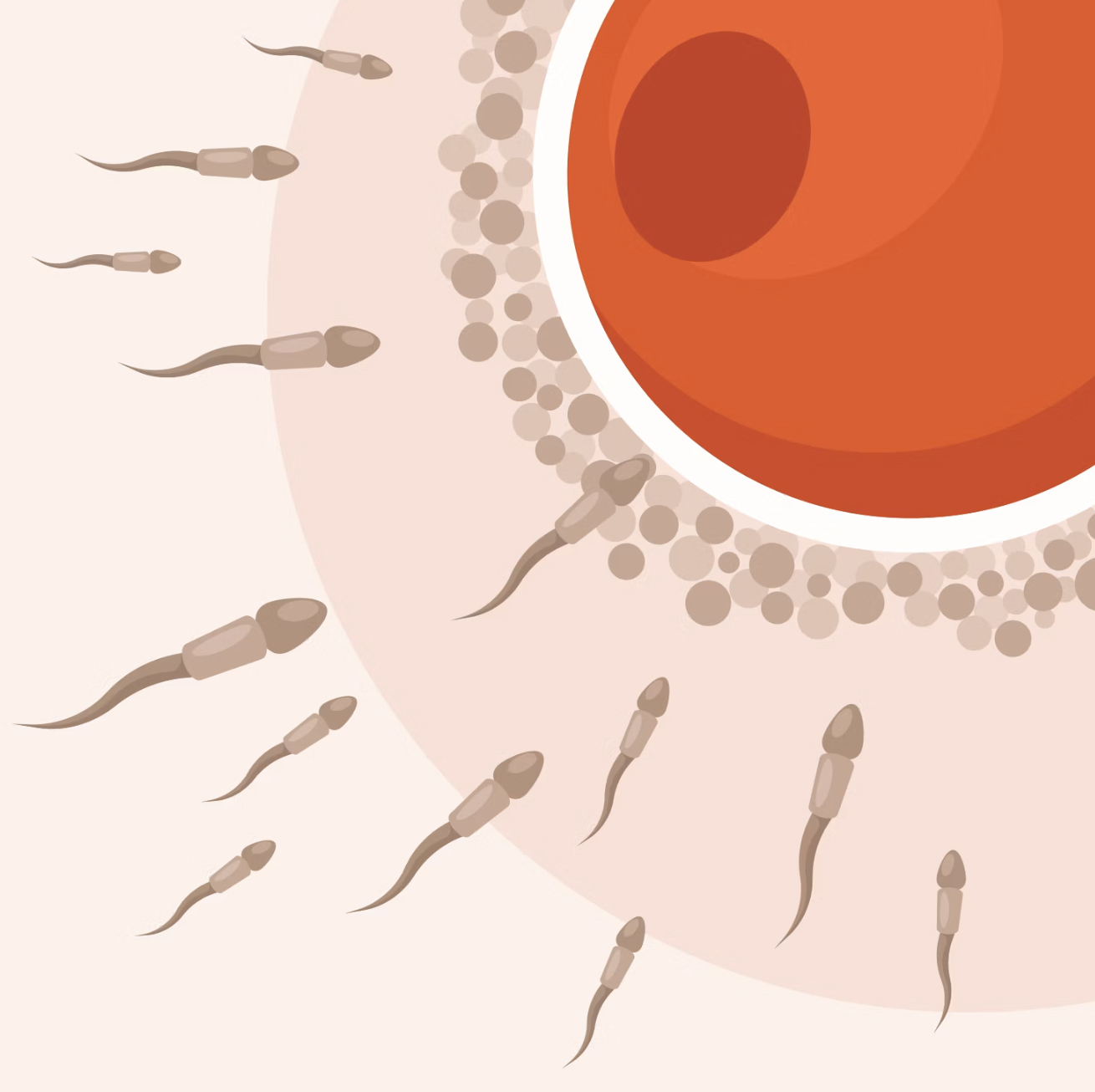
THE MALE FACTOR BLIND SOPT
This is the conversation that the majority of practitioners are not having, and it is costing couples their chances.
Male factor infertility is involved in approximately half of all cases where a couple is not conceiving. Not a minority. Half. And yet the male partner is routinely absent from the nutritional fertility conversation, both because clients do not always think to raise it and because practitioners are often uncertain about how to address it.
The standard NHS semen analysis tells you volume, concentration, motility, and morphology. It does not tell you about DNA fragmentation, which is the proportion of sperm carrying damaged genetic material. It does not tell you about the semen microbiome, which is increasingly understood to affect fertilisation rates and embryo quality. It does not tell you about oxidative stress in the seminal plasma, which can damage sperm even when the standard parameters look acceptable.
Here is what happens when male factor goes unaddressed. A couple is referred to an IVF clinic. The clinic assesses the woman. Her ovarian reserve is assessed. Her uterus is scanned. If her results are within range, or even if they are borderline, IVF is recommended. The male partner may have had a basic semen analysis that came back within normal limits. Nobody runs a DNA fragmentation test. Nobody looks at the semen microbiome. Nobody asks about the husband's diet, sleep, alcohol intake, laptop habits, or the heat exposure from his job.
The couple goes through a cycle. It fails. The conversation turns to the woman's egg quality. More aggressive stimulation is suggested. Perhaps donor eggs are mentioned.
And the male factor that was quietly contributing the whole time remains untested and unaddressed.
As a fertility nutritionist, you have the knowledge and the standing to interrupt this pattern. You can ask for the male partner to be included. You can recommend DNA fragmentation testing through ScreenMe or similar. You can take a full male health and lifestyle history and build a targeted nutritional protocol. You can work with both partners simultaneously and give the IVF cycle, if it comes to that, the best possible foundation on both sides.
In IVF 2026, male infertility is increasingly recognised as an equally important factor, with advanced semen analysis, sperm DNA fragmentation testing, and careful evaluation of hormonal health, lifestyle factors, and medical conditions affecting sperm quality. The best clinics are moving in this direction. Your clients deserve a practitioner who is already there. Manychat
The IVF conversation you need to be able to have
Not every client needs IVF. But some of yours will be referred for it, or will have already started the process, or will be facing a recommendation for it that they are not sure is premature.
Being able to engage with that conversation clinically, from a position of genuine knowledge, is part of serving your clients well. It is not about arguing with a consultant or positioning yourself in opposition to the medical pathway. It is about being able to say: before you go into a cycle, here is what we should have assessed. Here is what we can still address in the time available. Here is how to give that cycle the best possible chance of working.
The updated NICE Fertility Guideline published in March 2026 includes an increased focus on male factor fertility and on fertility care at the primary care level. The guidance is moving toward earlier, more comprehensive investigation. But the reality on the ground is that many couples are still being funnelled into IVF without the investigation and preparation that evidence now supports. Manychat
You are the practitioner who can bridge that gap. But only if you have the clinical knowledge to do so confidently.
The range of what your clients actually need from you
Here is what meeting fertility clients where they are actually looks like across the spectrum of presentations you will encounter.
The client who is just starting out needs education, foundational testing, a dietary and lifestyle framework, and a supplement protocol built around what her results show. She needs to understand her cycle, her hormones, and the 90-day preparation window. She needs someone to take her seriously before the medical system decides she has been trying long enough to qualify for investigations.
The client with PMOS needs the full metabolic and endocrine picture assessed, a phase-specific dietary plan, insulin-sensitising nutritional support, thyroid monitoring, and a practitioner who understands why her GP's approach is insufficient. She also needs her partner assessed.
The client preparing for IVF needs phase-specific nutritional support across the entire cycle from downregulation through to transfer, including egg quality preparation before stimulation, OHSS risk management, endometrial receptivity work, vaginal microbiome preparation, and guidance on what to continue, pause, and prioritise at each stage. She needs clinic liaison support. And her partner needs his own protocol.
The client who has had failed transfers needs the full investigation opened up. Endometrial receptivity. Immune environment. Uterine microbiome. Thyroid antibodies. The male factor looked at again with DNA fragmentation this time. The nutritional picture reviewed in forensic detail.
All of these clients may have started their journey with you by typing egg quality into a search engine.
This post was written for qualified nutritional therapists and functional medicine practitioners. The AH Fertility Academy offers practitioner mentoring and short courses in specialist fertility nutrition.